Scan to BIM Modeling Services UK
Scan to BIM Modeling Services for UK Projects
We convert supplied point cloud and survey information into structured BIM models representing existing building conditions.
Scan to BIM can support refurbishment, retrofit, redevelopment, coordination and record-model workflows across architectural, structural and building-services disciplines.
Discuss Your Scan to BIM Project
Send us your point cloud, survey information, drawings and required model scope and we can review the expected BIM deliverables.
What Is Scan to BIM?
Turning Existing-Condition Survey Data into BIM
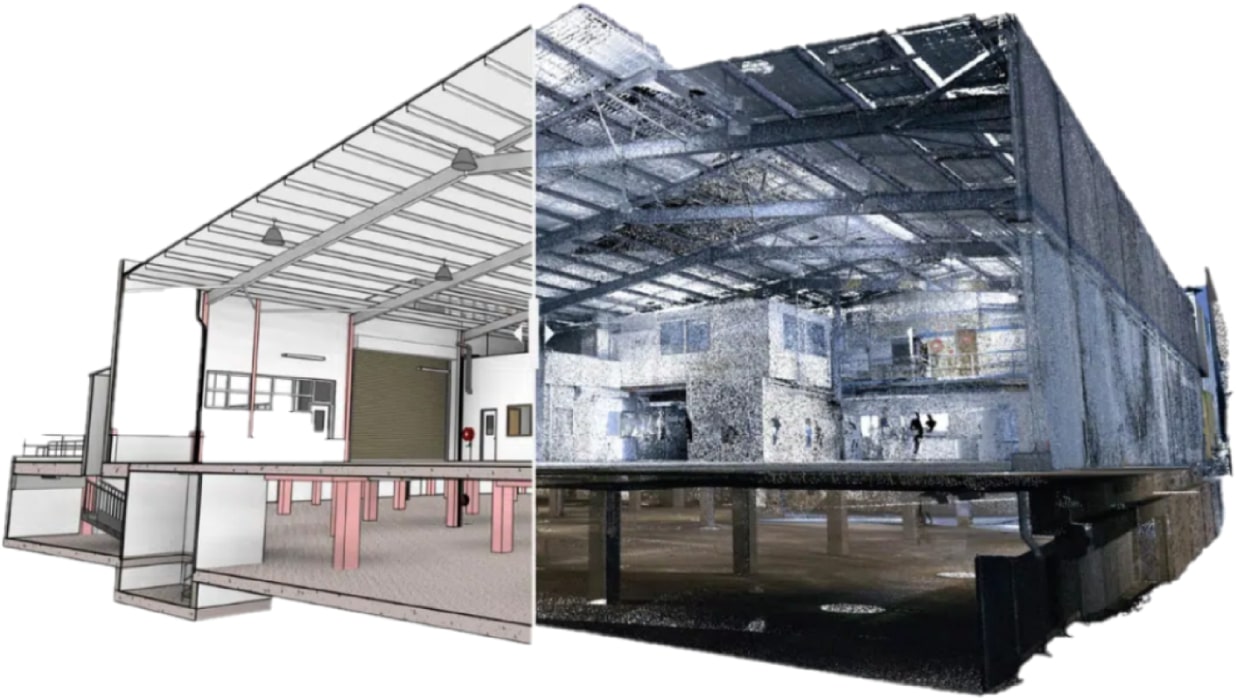
Scan to BIM is the process of using captured point cloud or measured-survey information to develop a digital BIM model of an existing building or asset. The resulting model can provide a structured reference for refurbishment design, retrofit work, coordination, documentation and other project activities that depend on understanding existing conditions.
Existing Conditions
BIM models developed around the geometry visible and measurable in the supplied survey information.
Revit Model Development
Point cloud and survey information translated into structured BIM geometry for agreed project uses.
Multidisciplinary Scope
Architectural, structural and MEP elements can be modeled where visible, identifiable and included in scope.
Defined Information Need
Model content agreed around project requirements instead of adding unnecessary detail by default.
Scan to BIM Disciplines
Existing-Building Models Across Key Disciplines
Scan-derived BIM scope can focus on one discipline or combine several building systems depending on the project requirement.
01 / Architecture
Architectural Scan to BIM
Existing walls, floors, roofs, openings and other visible architectural elements modeled from supplied survey data.
Architectural BIM →02 / Structure
Structural Scan to BIM
Visible structural elements represented in BIM where supported by the point cloud and agreed project scope.
Structural BIM →03 / Building Services
MEP Scan to BIM
Accessible and identifiable building-services elements modeled from captured existing-condition information.
MEP BIM →Scan to BIM Capabilities
What Our Scan to BIM Services Include
Scope is defined around the supplied survey information, required model purpose and expected deliverables.
01
Point Cloud to Revit
Existing-condition information translated into structured Revit BIM models for agreed project uses.
02
As-Built BIM Modeling
Digital models developed to represent surveyed existing conditions at the agreed level of information.
03
2D Drawing Extraction
Plans, elevations and sections can be produced from the model where included in the agreed scope.
04
Refurbishment BIM Models
Existing-building BIM information prepared to support refurbishment and redesign workflows.
05
Retrofit Coordination
Existing-condition models used alongside proposed design information to support spatial coordination.
Clash Detection →06
Existing-Building Documentation
BIM models supporting clearer digital records where suitable source information is available.
Existing Conditions
Build the Design Workflow Around Surveyed Reality
Existing drawings may not always reflect alterations, extensions or installation changes made during a building’s life.
A BIM model developed from current survey information gives design and construction teams a structured digital reference for planning work within the existing environment.
Typical Applications
Where Scan to BIM Can Support a Project
Refurbishment
Existing-condition BIM models supporting design work within retained building fabric.
Retrofit
Survey-based digital information supporting upgrades to existing spaces and systems.
Redevelopment
Existing-site information used as a digital reference when planning alterations or extensions.
Record Documentation
BIM models and drawings developed from surveyed conditions for agreed record purposes.
Project Information
Scan to BIM Inputs and Deliverables
The required model scope should be agreed before production begins so the output reflects both the source survey and intended use.
Typical Inputs
- Registered point cloud data
- Measured survey information
- Existing CAD drawings where available
- Existing PDFs or record drawings
- Photographic reference information
- Required discipline scope
- Project BIM requirements
Typical Deliverables
- Existing-condition Revit models
- Architectural BIM models where in scope
- Structural BIM models where in scope
- MEP BIM models where in scope
- IFC exchange where required
- Plans, sections and elevations where included
- Coordinated model revisions where required
Scan to BIM Workflow
From Point Cloud to BIM Deliverables
Review Survey Data
Check the supplied point cloud, drawings and supporting information.
Define Scope
Agree disciplines, model use, information need and deliverables.
Develop BIM Model
Model agreed existing elements from the supplied survey information.
Review Model
Check model coverage and alignment against the available source data.
Issue Deliverables
Provide the agreed BIM model and documentation formats.
Model Accuracy Should Be Defined Before Modeling Starts
Scan to BIM model fidelity depends on the quality, coverage and registration of the supplied survey data as well as the agreed project scope. Required tolerances, model purpose, element coverage and Level of Information Need should therefore be defined before production begins. The BIM model does not improve or replace the accuracy of the underlying measured survey.
Digital Deliverables
From Survey Information to Usable Project Data
Scan to BIM deliverables can be structured around design, coordination, documentation or record-model requirements.
The important point is to agree what needs to be modeled before converting large volumes of survey information into BIM geometry.
Point Cloud Data
Surveyed spatial information forming the primary reference for existing-condition BIM development.
Autodesk Revit
Structured BIM model development for agreed architectural, structural and MEP scope.
IFC
Open model exchange where required by the project information-management workflow.
Plans & Sections
Model-based 2D outputs prepared where drawings form part of the agreed deliverables.
Existing vs Proposed
Existing-condition BIM information can support coordination with proposed architectural, structural and MEP designs.
Defined Model Scope
Model detail, element coverage and information content agreed around the intended project use.
UK BIM Requirements
Existing-Condition Models Structured Around Information Need
A Scan to BIM model should contain the geometry and information required for its intended purpose rather than attempting to reproduce every visible feature.
Delivery can align with ISO 19650 information-management principles, agreed BIM Execution Plans and relevant project information requirements.
Scope Can Be Defined Around
- Intended model use
- Level of Information Need
- Required element coverage
- Survey-data quality and completeness
- Modeling tolerance requirements
- Discipline responsibilities
- Required exchange and drawing outputs
Project Evidence
See BIM Delivery in Practice
Review project examples showing how coordinated BIM information has supported real project requirements.
Common Questions
Scan to BIM Modeling FAQs
What do you need to start a Scan to BIM project?
The main input is typically registered point cloud or measured survey data. Existing drawings, photographs and project BIM requirements can also help define the required model scope.
Can point cloud data be converted into a Revit model?
Yes. Supplied point cloud information can be used as a reference for developing structured Revit models of agreed existing architectural, structural or MEP elements.
Can you model architectural, structural and MEP elements?
Yes, where those elements are visible or otherwise supported by the supplied survey information and included within the agreed project scope.
Is Scan to BIM suitable for refurbishment projects?
Yes. It is particularly useful where project teams need a structured digital representation of existing conditions before developing refurbishment or retrofit proposals.
Can you produce plans, elevations and sections from the model?
Yes. Model-based plans, elevations and sections can be delivered where they form part of the agreed scope.
How accurate is a Scan to BIM model?
Accuracy should be agreed for each project. The achievable model fidelity depends on the underlying survey quality, point-cloud coverage, registration and the modeling tolerances defined in the project scope.
Start Your Scan to BIM Project
Have Point Cloud Data That Needs Converting to BIM?
Send us your survey data, existing drawings and required project outputs and we can review the appropriate Scan to BIM modeling scope.
Request a BIM Quote