
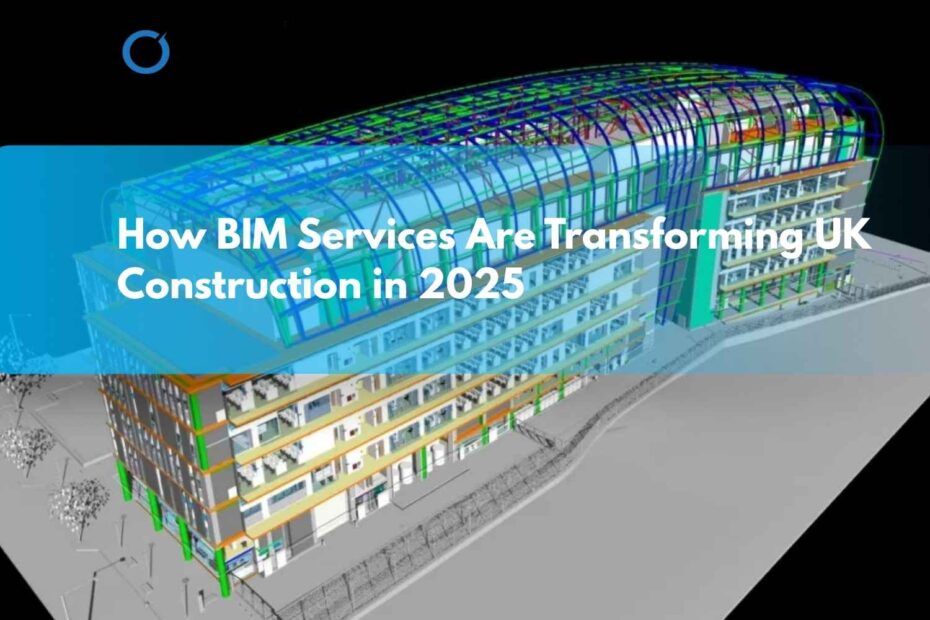
BIM services in the UK support architects, engineers, contractors and asset teams by creating and managing structured digital information across design, coordination, construction and operation. In 2026, the value of BIM is less about producing a 3D model in isolation and more about using reliable information, agreed workflows and coordinated models for specific project decisions.
What Are BIM Services?
BIM services cover the production, coordination, conversion and management of digital building information. Depending on the project, that can include architectural, structural or MEP models, coordination models, existing-building models created from supplied survey data, construction sequencing or additional BIM production capacity.
The important point is that the required BIM service should be defined by the intended project use. A contractor preparing for multidisciplinary coordination has different information needs from an architect developing a Revit model or a refurbishment team converting a registered point cloud into an existing-condition model.
Our BIM services for UK projects are therefore structured around specific project requirements rather than treating every BIM commission as the same type of modelling exercise.
What Matters for UK BIM Projects in 2026?
UK BIM delivery increasingly depends on the quality and control of project information rather than simply whether a project uses Revit or another BIM application.
Clear information requirements
Teams need to understand what information is required, why it is required, who is responsible for producing it and when it needs to be exchanged.
Defined Level of Information Need
Models should contain information appropriate to their intended purpose rather than being developed to an arbitrary level of detail.
Controlled information exchange
File naming, revision status, approval procedures and exchange formats should follow the project information-management process.
Multidisciplinary coordination
Architectural, structural and building-services information needs to be reviewed together where project interfaces create coordination risk.
Which BIM Service Does Your Project Need?
Different BIM services answer different project questions. Choosing the correct scope at the beginning helps avoid unnecessary modelling and unclear deliverables.
| Project requirement | Relevant BIM service | Typical purpose |
|---|---|---|
| Develop a digital project model | 3D BIM Modeling | Model development for design, coordination and information delivery. |
| Develop discipline-specific architectural information | Architectural BIM | Architectural modelling, documentation and coordination. |
| Model structural systems | Structural BIM | Concrete, steel and framing model development and coordination. |
| Coordinate building services | MEP BIM | Mechanical, electrical and public-health modelling and coordination. |
| Model an existing building from survey information | Scan to BIM | Convert supplied point-cloud or survey information into a structured BIM model. |
| Convert existing drawings into BIM | CAD to BIM | Develop BIM models from suitable CAD, PDF and drawing information. |
| Identify multidisciplinary model conflicts | BIM Clash Detection | Review hard clashes, clearance issues and coordination interfaces. |
| Link BIM with programme or cost information | 4D & 5D BIM | Time-based sequencing and cost-linked information workflows. |
| Add external BIM delivery capacity | BIM Outsourcing | Defined production packages, overflow capacity or ongoing BIM support. |
ISO 19650 and UK BIM Workflows
ISO 19650 provides a framework for managing information using BIM across the lifecycle of built assets. In UK projects, it is closely associated with the UK BIM Framework and provides principles for organising, producing, exchanging and controlling information.
An ISO 19650-compliant BIM workflow is not simply a particular Revit template or naming convention. It involves clearly defined information requirements, responsibilities, information states, exchange processes and controlled delivery procedures.
Important distinction: saying that a project follows ISO 19650-compliant workflows is different from claiming that a company is independently ISO 19650 certified. Certification should only be claimed where the relevant certification actually exists.
For project teams, practical questions include:
- What information is required from each appointed party?
- What is the intended purpose of the model or information container?
- What information needs to be exchanged at each project stage?
- Which party is responsible for reviewing and accepting information?
- How will revisions, status and approvals be controlled?
- Which model and exchange formats are required?
How Can BIM Support UK Contractors?
Contractors can use BIM to understand design information spatially, coordinate disciplines, review construction interfaces and communicate planned activities more clearly.
For example, a federated coordination model can be used to identify modelled conflicts between structure and MEP systems before those interfaces reach site. A clash-detection workflow can then group and report those issues for review by the responsible project disciplines.
Where programme information is available, 4D BIM can link model elements with construction activities so teams can review sequencing visually.
These workflows can support better coordination and decision-making, but BIM does not by itself guarantee a reduction in cost, programme duration or site rework. Outcomes depend on information quality, project processes, design decisions and how identified issues are acted upon.
The Role of BIM Outsourcing in UK Projects
BIM outsourcing can provide additional production capacity where an architecture, engineering or construction team needs support with defined modelling or coordination tasks.
Typical reasons for outsourcing include:
- temporary increases in project workload;
- defined model-production packages;
- CAD or point-cloud conversion requirements;
- multidisciplinary coordination support;
- recurring BIM production across agreed project stages.
The important consideration is not simply where the model is produced. The outsourced team needs to work within the project’s information requirements, model standards, revision procedures and responsibility structure.
Our BIM outsourcing services are therefore based on clearly defined inputs, outputs, review points and responsibility boundaries.
What Should You Check Before Appointing a BIM Service Provider?
A useful BIM proposal should describe more than software capability. Before appointing a provider, establish what information will be supplied, what the provider will produce and how the work will be reviewed.
Scope
Which models, disciplines, zones or project stages are included?
Inputs
Which drawings, models, surveys, specifications and requirements will be supplied?
Deliverables
What model formats, drawings, reports or information exchanges are required?
Responsibilities
Who retains design, engineering, approval and information-management responsibility?
Information requirements
What Level of Information Need, classification and model standards apply?
Revision workflow
How will comments, model updates, approvals and issue stages be controlled?
What Is Changing in BIM Delivery?
BIM workflows continue to move toward more structured information exchange, greater interoperability and closer integration between model information and project decision-making.
Automation and AI-enabled tools can assist with checking, classification, model review and information processing, but those tools do not remove the need for controlled source information, defined responsibilities and professional project judgement.
For UK AEC teams, the practical priority remains the same: create the right information for the intended purpose, manage it consistently and make it accessible to the people responsible for making project decisions.
Frequently Asked Questions
What are BIM services in the UK?
BIM services include digital model development, coordination, Scan to BIM, CAD to BIM, clash detection, 4D/5D workflows and BIM production support. The exact service should be selected according to the project information requirement and intended BIM use.
Is ISO 19650 mandatory for every UK construction project?
No single statement applies to every UK project. ISO 19650 provides an internationally recognised information-management framework and is central to the UK BIM Framework, but specific contractual or procurement requirements depend on the project, client and appointment documents.
What is the difference between BIM modeling and BIM coordination?
BIM modeling develops the digital representation and associated information. BIM coordination brings relevant discipline models together to review interfaces, spatial conflicts and project coordination issues.
When should Scan to BIM be used?
Scan to BIM is appropriate when supplied point-cloud or measured-survey information needs to be converted into a structured BIM model for an existing building or asset. Model fidelity depends on the quality, coverage and registration of the source survey data.
Does BIM guarantee lower construction costs?
No. BIM can support coordination, information management, quantity review and planning, but cost outcomes depend on the wider project, the quality of available information and how project teams use the BIM outputs.
Can BIM work be outsourced while the UK project team retains responsibility?
Yes. Defined BIM production tasks can be outsourced while design, engineering, approval and other professional responsibilities remain with the appointed project parties unless those responsibilities are explicitly included in the outsourced appointment.
Need BIM Support for a UK Project?
Explore our BIM modeling, coordination, conversion and outsourcing services, or send us your project requirements for a scope review.
Request a BIM Quote