The construction industry no longer relies only on drawings, paperwork, and disconnected workflows. As projects grow larger, more complex, and time-sensitive, teams now depend on digital collaboration to work efficiently. This shift has prompted many professionals to ask an important question: what is BIM, and how does it transform the way teams plan and deliver construction projects?
Building Information Modelling, commonly known as BIM, has changed the way buildings are designed, constructed, and managed. It brings together people, processes, and data into a shared digital environment that improves accuracy, coordination, and decision-making. Understanding what is BIM in construction is now critical for architects, engineers, contractors, and developers who want to stay competitive in a rapidly evolving industry.
What Is building information modelling (BIM)?
To clearly define what is BIM, it is important to look beyond 3D modeling alone. BIM is a digital process that creates intelligent, data-rich models representing the physical and functional characteristics of a building. These models contain information about geometry, materials, quantities, costs, timelines, and performance data.
Unlike traditional CAD drawings, which are static and disconnected, BIM models are dynamic and interconnected. When one element is updated, related components automatically adjust across the model. This ensures consistency and accuracy throughout the project lifecycle.
At its core, Building Information Modelling acts as a centralised source of information that supports collaboration, reduces errors, and improves project efficiency from concept design to facility management.
What Is BIM in Construction?
Understanding what is BIM in construction requires examining how it is used in real-world project workflows. BIM supports every stage of a construction project, starting from early planning and continuing through operation and maintenance.
During the design phase, BIM enables teams to visualise complex structures, test design options, and evaluate constructability. In the construction phase, BIM supports coordination between trades, clash detection, quantity takeoffs, and scheduling. After construction, BIM data can be used for asset management, renovations, and long-term facility operations.
This lifecycle approach makes BIM far more powerful than traditional design methods, helping stakeholders make informed decisions at every stage.
How BIM Improves Project Collaboration
One of the strongest advantages of BIM is its ability to improve collaboration. Construction projects often involve multiple disciplines working in silos, which leads to miscommunication and costly errors. BIM eliminates this issue by allowing all stakeholders to work within a shared digital model.
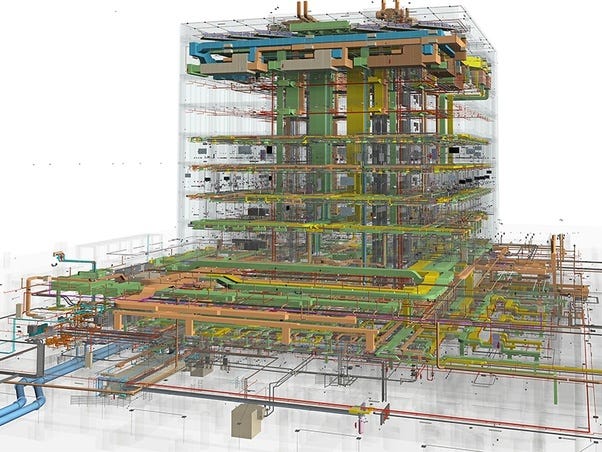
Architects, structural engineers, MEP consultants, and contractors can coordinate their designs in real time. Clash detection identifies potential conflicts between systems early, which reduces changes during construction. This level of transparency improves teamwork, shortens review cycles, and keeps projects aligned with design intent.
Improved collaboration also leads to fewer disputes, clearer responsibilities, and smoother project execution.
BIM and Cost Control in Construction Projects
Cost overruns are a major challenge in construction, often caused by inaccurate estimates and late design changes. BIM addresses these issues by linking model elements directly to quantities and cost data.
With Building Information Modelling, teams can generate accurate quantity takeoffs automatically, reducing manual errors. As the design evolves, cost information updates in real time, allowing stakeholders to evaluate the financial impact of design decisions early. This proactive approach improves budget control and reduces unexpected expenses.
For developers and contractors, BIM provides greater confidence in project feasibility and financial planning.
Construction Scheduling and Time Management with BIM
Delays can significantly affect project outcomes, leading to higher costs and strained client relationships. BIM improves scheduling accuracy through 4D modeling, which links the 3D model with time-based data.
By visualising construction sequences digitally, teams can identify potential bottlenecks, optimise workflows, and plan site activities more effectively. This helps prevent delays caused by poor coordination or sequencing conflicts.
BIM-based scheduling also improves communication with clients and stakeholders by providing clear visual timelines instead of complex charts.
Reducing Errors and Risk Through BIM
Construction errors often occur when inconsistencies between drawings go unnoticed until work begins on site. BIM reduces this risk by maintaining a single, coordinated model that updates automatically.
Clash detection tools identify conflicts between structural, mechanical, electrical, and plumbing systems before construction starts. Design validation and constructability analysis help teams ensure designs meet standards and support efficient construction.
By identifying issues early, BIM minimises rework, improves quality, and enhances overall project reliability.
BIM and Sustainable Construction Practices
Sustainability is a growing priority in the construction industry, and BIM plays an important role in achieving environmental goals. Teams use BIM models to analyse energy performance, daylighting, material usage, and lifecycle impacts during the design phase.
This allows project teams to test sustainable design options and make informed decisions that reduce energy consumption and operating costs. BIM also supports compliance with green building standards and environmental regulations.
By integrating sustainability analysis into the design process, BIM helps create buildings that are efficient, responsible, and future-ready.
BIM Across Different Construction Sectors
Construction teams use BIM (Building Information Modelling) across various sectors, and each sector benefits in different ways. Residential projects use BIM for visualisation, planning, and accurate documentation. Commercial developments rely on BIM for complex coordination and space management.
Industrial and infrastructure projects use BIM to manage large-scale coordination, safety planning, and lifecycle data. Healthcare facilities benefit from BIM’s ability to manage complex systems and long-term operational requirements.
This adaptability makes BIM a valuable solution for a wide range of project types and scales.
Challenges in BIM Adoption
Despite its benefits, adopting BIM can present challenges such as initial investment, training requirements, and changes to traditional workflows. However, teams can address these challenges with proper planning and support.
Many firms choose to work with experienced partners who provide specialised expertise and scalable resources. Outsourcing allows organisations to implement BIM efficiently without disrupting internal operations or increasing overhead costs.
With the right approach, BIM adoption becomes a strategic advantage rather than a barrier.
The Future of BIM in Construction
BIM continues to evolve as new technologies emerge. Integration with digital twins, cloud-based collaboration, and data analytics is expanding BIM’s capabilities beyond design and construction. These advancements enable real-time monitoring, predictive maintenance, and improved asset management.
As industry standards and client expectations grow, BIM is becoming a requirement rather than an option. Companies that invest in BIM today are better positioned to meet future demands and deliver higher-quality projects.
Understanding what is BIM and what is BIM in construction is essential for staying competitive in a data-driven construction environment.
Choosing the Right BIM Support
Implementing BIM successfully requires more than just software, it demands experience, structured workflows, and technical expertise. Professional BIM Modeling Services help firms manage design coordination, documentation, clash detection, and construction planning with greater accuracy and efficiency. By partnering with skilled BIM specialists, organisations can reduce risks, improve collaboration, and achieve consistent project outcomes.
At BIM Modelling Services UK, experienced BIM experts with 29+ years of industry experience across multiple sectors support projects with proven methodologies and deep technical knowledge. This expertise allows teams to focus on delivering value while confidently leveraging advanced digital capabilities throughout every stage of construction.
Why BIM Continues to Matter
BIM reshapes the construction industry by improving how teams plan, coordinate, and deliver projects. It enhances collaboration, reduces errors, controls costs, and supports sustainability goals across the entire building lifecycle.
As construction continues to move toward smarter, data-driven practices, BIM remains a foundational tool for achieving efficiency and quality. Organisations that fully embrace BIM are better equipped to deliver successful projects in an increasingly competitive market.
FAQs (Frequently Asked Questions)
BIM is used in construction to create coordinated digital models that support design planning, clash detection, quantity takeoffs, construction scheduling, and facility management. It helps teams reduce errors and improve project efficiency.
No, BIM is used for projects of all sizes, including residential, commercial, and infrastructure developments. Even small projects benefit from improved accuracy, visualization, and coordination.
BIM reduces construction errors by identifying design clashes early, maintaining consistent project data, and allowing teams to resolve conflicts before construction begins.
Professional BIM Modeling Services provide expertise, standardized workflows, and accurate digital models that help firms improve collaboration, reduce rework, and deliver projects more efficiently.
Building Information Modelling improves collaboration, cost control, scheduling accuracy, clash detection, and long-term asset management.